Red Star Over the Third World by Vijay Prashad
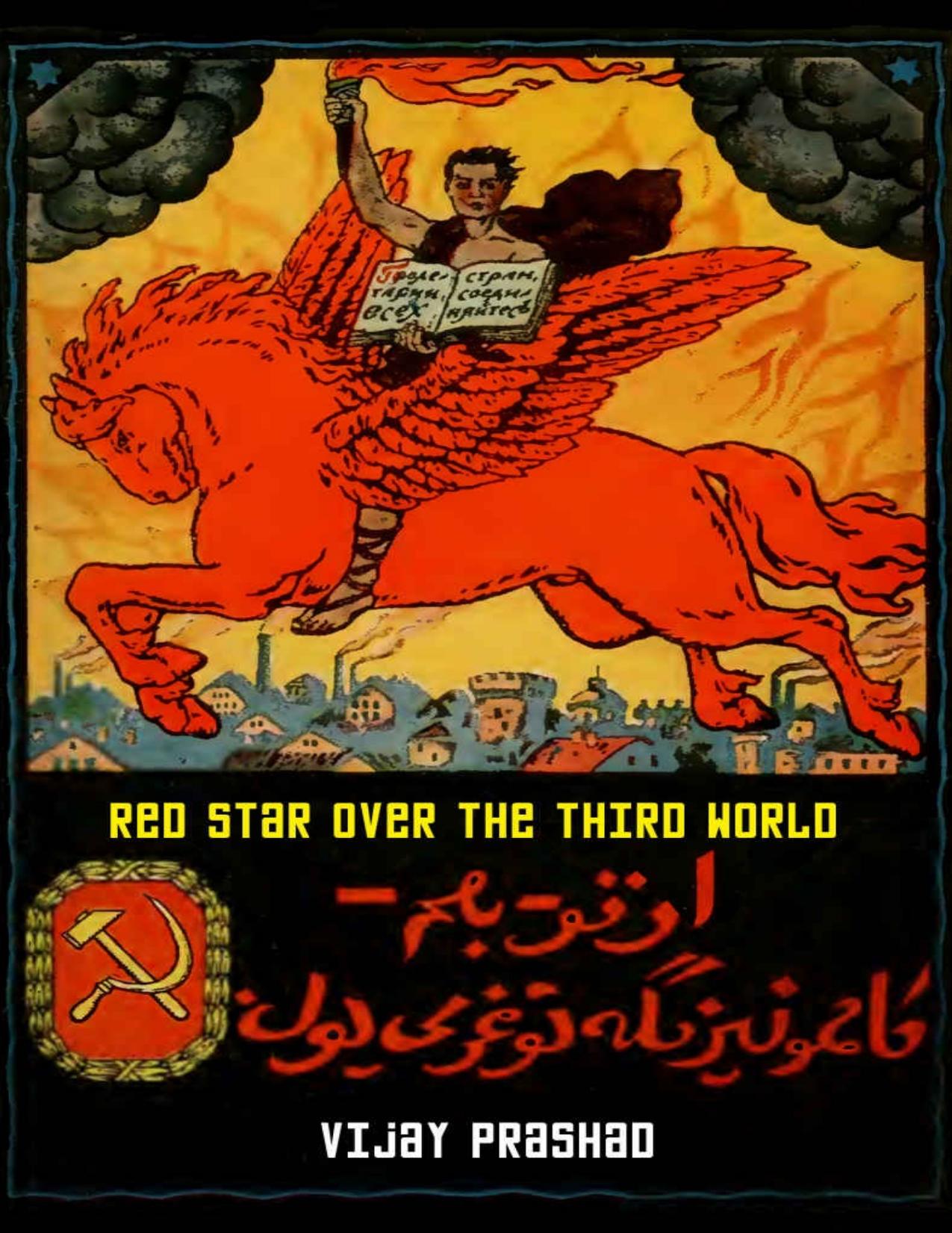
Author:Vijay Prashad [Prashad, Vijay]
Language: eng
Format: azw3, epub, pdf
Publisher: LeftWord Books
Published: 2018-01-24T05:00:00+00:00
Cavalry detachment of the Red Army in Mongolia (1919).
Enemy of Imperialism
The October Revolution and the communist movement appealed to people because, as the Comintern put it in 1928, ‘they see in it the most decisive enemy of imperialism’. But, as the Comintern worried, the communist movement is not merely about an end to colonial domination. It was pledged to end imperialism, which by necessity meant to end the class domination of the peoples of the colonies by both the bourgeoisie in Europe and by the tropical bourgeoisie.
Lenin and the Bolsheviks understood vacillation. The February revolution of the workers and the peasants had overthrown the Tsar’s regime. The government of Alexander Kerensky that followed was entangled in the tentacles of Russian capitalism and, through them, imperialism. The Russian capitalists had a subordinate position vis-à-vis imperialism. In his history of the Russian Revolution, Leon Trotsky wrote that the Russian autocracy on the one hand and the Russian bourgeoisie on the other hand ‘contained features of compradorism, ever more and more clearly expressed. They lived and nourished themselves upon their connections with foreign imperialism, served it, and without their support could not have survived’. Trotsky used a word that was commonplace in radical circles at that time – compradorism. It comes from the days of Portugal’s dominance in the ports of Asia. A ‘comprador’ was a buyer who came from an Asian society, lived in the port, bought goods for the Portuguese to their benefit and held these goods till Portuguese ships arrived to load them for their trading advantage. Marxists in Asia drew upon this word and used it to refer to the parasitical native bourgeoisie, which operated not for its own benefit alone but for the benefit ultimately of imperialism. The Russian bourgeoisie – like that of other bourgeois formations in the colonial and semi-colonial world – tended to the interests of imperialism more perhaps than the interests of themselves.
The Russian bourgeoisie was the host to European imperialism inside Russia, but, at the same time, the Russian bourgeoisie had its own imperial projects in Manchuria, Mongolia and Persia. Since Kerensky would not confront the Russian bourgeoisie and was willing to surrender to Western imperialism, his government would eventually betray the revolution. That it is why it had to be overthrown in October 1917. It is also what allowed the Bolsheviks to learn a lesson when they went into the anti-colonial struggle. The national bourgeoisie of the colonies would instinctively be against colonial rule, but they would not necessarily be against imperialism. Their class betrayal had to be confronted within the national movements.
The leadership of the nationalist anti-colonial movements did not necessarily have the will to stay the course. ‘Many of these adherents of the Party, in the course of the revolutionary struggle, will reach a proletarian class point of view’, the Comintern noted, but ‘another part will find it more difficult to free themselves to the end, from the moods, waverings and half-hearted ideology of the petty bourgeoisie’. The nationalist bourgeoisie
Download
Red Star Over the Third World by Vijay Prashad.epub
Red Star Over the Third World by Vijay Prashad.pdf
This site does not store any files on its server. We only index and link to content provided by other sites. Please contact the content providers to delete copyright contents if any and email us, we'll remove relevant links or contents immediately.
| Africa | Americas |
| Arctic & Antarctica | Asia |
| Australia & Oceania | Europe |
| Middle East | Russia |
| United States | World |
| Ancient Civilizations | Military |
| Historical Study & Educational Resources |
The Sympathizer by Viet Thanh Nguyen(4440)
The Rape of Nanking by Iris Chang(4255)
World without end by Ken Follett(3510)
Ants Among Elephants by Sujatha Gidla(3494)
Blood and Sand by Alex Von Tunzelmann(3238)
Japanese Design by Patricia J. Graham(3213)
The Queen of Nothing by Holly Black(2656)
City of Djinns: a year in Delhi by William Dalrymple(2580)
India's Ancient Past by R.S. Sharma(2492)
Foreign Devils on the Silk Road: The Search for the Lost Treasures of Central Asia by Peter Hopkirk(2482)
Inglorious Empire by Shashi Tharoor(2462)
Tokyo by Rob Goss(2461)
In Order to Live: A North Korean Girl's Journey to Freedom by Yeonmi Park(2408)
Tokyo Geek's Guide: Manga, Anime, Gaming, Cosplay, Toys, Idols & More - The Ultimate Guide to Japan's Otaku Culture by Simone Gianni(2400)
India's biggest cover-up by Dhar Anuj(2381)
The Great Game: On Secret Service in High Asia by Peter Hopkirk(2371)
Goodbye Madame Butterfly(2275)
Batik by Rudolf Smend(2210)
Living Silence in Burma by Christina Fink(2093)
